Buying houses have long connected global buyers with Bangladesh's garment factories — handling sourcing, negotiation, and quality control. But as sourcing relationships mature, is that middle layer still worth the commission, or does direct sourcing serve you better
Bangladesh's $39+ billion RMG export industry runs on a layer of intermediaries most international shoppers never think about: buying houses. For decades, they've been the connective tissue between global retailers and local factories — but as sourcing has matured, more buyers are asking whether that layer is still necessary for every order.
What Is a Buying House?
A buying house is a professional intermediary organization that sits between a foreign buyer and a local manufacturer. Its core job is to help the buyer secure the right quality product at a competitive price by leveraging local supplier relationships, market knowledge, and negotiation experience the buyer may not have in-house. Bangladesh has two broad types: buying agencies / liaison offices, which represent a specific overseas buyer's interests, and trading offices, which buy and resell more independently.
Core Functions of a Buying House
Sourcing — matching buyer specifications to a network of vetted manufacturers, factoring in production capacity, compliance, and price
Negotiation — handling price, lead time, payment terms, and quality control terms on the buyer's behalf
Compliance verification — confirming the manufacturer holds the licenses and certifications required for export
Quality control — running pre-shipment inspections through dedicated QA teams to confirm the goods meet spec before they ship
Production monitoring — tracking timelines, raw material availability, and resolving production issues as they arise
Sample development — coordinating sample rounds until the buyer approves final production
Logistics coordination — managing shipping and documentation once goods are ready
The Case for a Buying House
For buyers without an established presence in Bangladesh, a buying house genuinely reduces friction:
Time saved — one point of contact instead of managing multiple factory relationships directly
Risk reduction — an added layer of quality and compliance checking before goods ship
Market access — relationships and local knowledge that take years to build independently
When Direct Sourcing Makes More Sense
The trade-off is real, though: every layer between buyer and factory adds a commission — commonly cited around 5% of order value — and a step of communication that can slow down decisions during production. For buyers placing consistent, higher-volume orders, or who want direct visibility into production and compliance rather than a summarized update, working directly with a compliant, export-ready manufacturer removes that layer entirely.
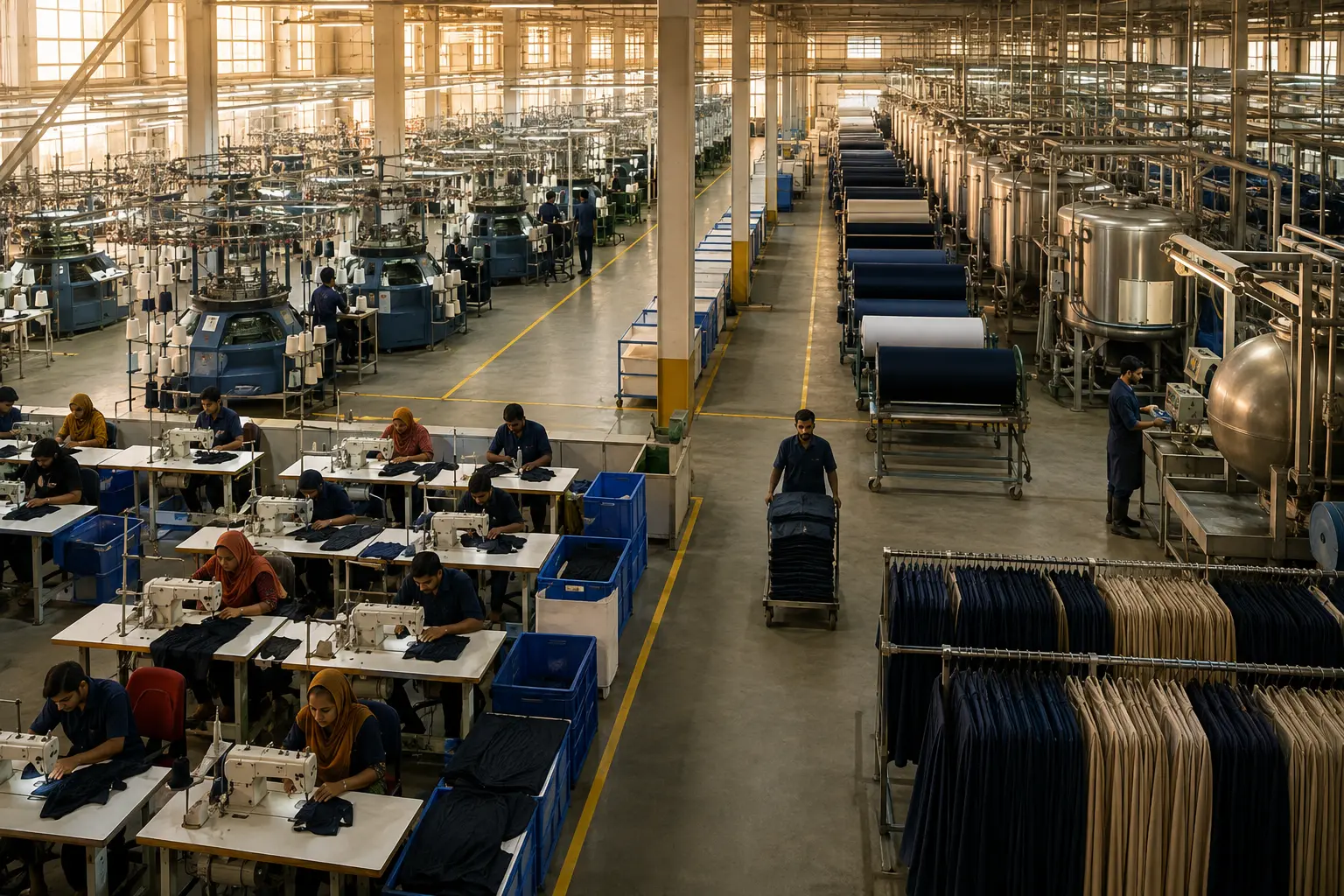
This is where manufacturers like Warptex Bangladesh Limited fit into the picture — with in-house compliance verification, dedicated QA/QC teams, and direct production monitoring already built into our process, buyers get the same safeguards a buying house would provide, without the added markup or communication lag. [See our compliance standards →] [Explore our QA/QC process →]
The Bottom Line
Buying houses remain a valuable, sometimes essential, part of Bangladesh's RMG ecosystem — particularly for first-time buyers or smaller order volumes. But as your sourcing relationship matures, it's worth periodically asking whether that intermediary layer is still earning its commission, or whether a direct manufacturer relationship now serves you better.